The "Butterfly Pillow" Trend: Why Sleep Experts Are Talking About It
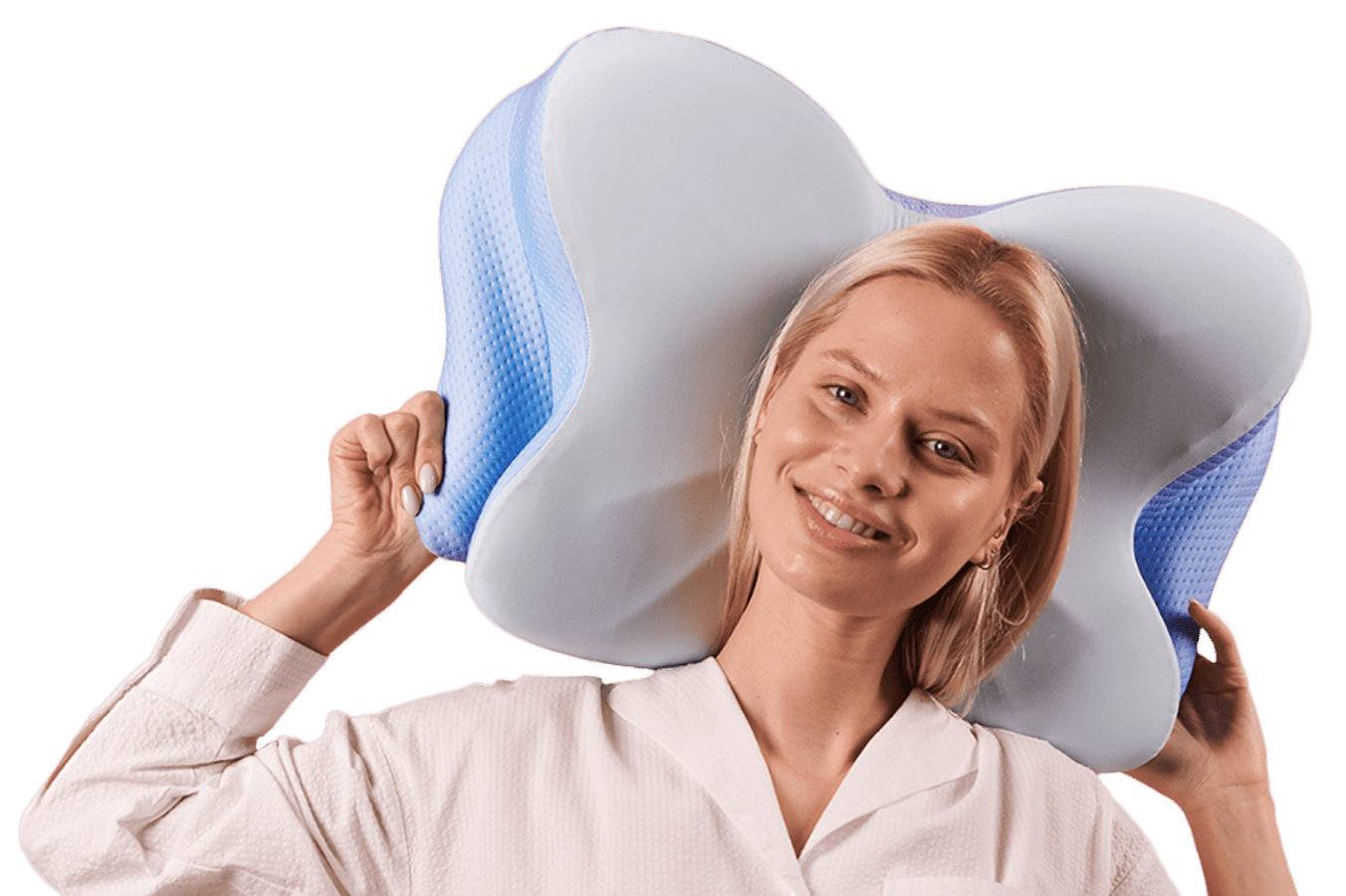
If you wake up every morning feeling like you slept on a bag of rocks — neck stiff, shoulders aching, a low-grade headache already building behind your eyes — you are far from alone.
According to sleep medicine research, up to 80% of adults experience musculoskeletal discomfort linked to poor sleep posture at some point in their lives. A significant portion of these cases are directly attributable to one overlooked culprit sitting on your bed right now: your pillow.
The cervical spine — the seven vertebrae that form the neck — has a natural inward curve called the cervical lordosis. When you sleep, this curve needs to be continuously supported, or the surrounding muscles go into a low-level state of contraction all night long, trying to compensate for what your pillow fails to do. You wake up exhausted not because you didn't sleep — but because your muscles were working overtime while you did.
Traditional pillows are built for comfort on the shelf — soft, fluffy, inviting. But that same softness collapses under the weight of your head within minutes, leaving your neck hanging in a position that biomechanists call lateral flexion overload. Hours of this, night after night, accumulates into the chronic stiffness that millions of people have simply accepted as a fact of life.
But there's a growing movement in sleep ergonomics — driven by the intersection of memory foam engineering and anatomical design — that's challenging that assumption. And at the center of it is a quietly revolutionary product design that sleep researchers and physical therapists are calling the "butterfly pillow."
The Derila Ergo Memory Foam Pillow is one of the most talked-about products in this emerging category. In this investigative review, we're going to examine exactly what it is, how it works, and whether the science actually supports the claims — so you can make an informed decision. If you've been searching for the Best Ergonomic Pillow for Neck Pain, this review is built specifically for you.
The Problem With Most Pillows (And Why the Foam Matters More Than You Think)
Walk into any big-box retailer and you'll find dozens of pillows ranging from $8 to $80. Most of them look broadly similar. But beneath the surface, they are profoundly different — and those differences have a direct impact on your spinal health.
Cheap Low-Density Foam: The Illusion of Support
Budget memory foam pillows — typically retailing under $25 — are manufactured with low-density foam (usually 1.5–2.5 lb/ft³). This foam feels soft and responsive at first touch, which creates the impression of quality. But density is the defining metric of foam longevity and support.
Low-density foam breaks down rapidly under consistent pressure. Within weeks, it develops "sleep impressions" — permanent depressions where your head rests. This means the pillow stops conforming to your neck and starts conforming to a fixed shape that may not match your anatomy at all. It also means the material loses its pressure-distributing properties, creating concentrated hot spots on the occipital bone and cervical vertebrae.
High-Density Ergonomic Memory Foam Pillows: A Different Category Entirely
High-density memory foam (3.0+ lb/ft³) is a fundamentally different material. It responds to both heat and pressure, softening in the areas where your body makes contact while maintaining structural integrity in the surrounding zones. This means it cradles without collapsing — the critical distinction that separates genuine sleep ergonomics from marketing language.
The Derila Ergo is built in this higher-density category, paired with an anatomically contoured design — the so-called "butterfly" shape — that takes the material science a step further by directing that adaptive support to exactly where the cervical spine needs it most.
Quick Comparison: Budget vs. Ergonomic Memory Foam
| Feature | Budget Foam Pillow | Derila Ergo (Ergonomic) |
|---|---|---|
| Foam Density | Low (1.5–2.5 lb/ft³) | High-Density |
| Contour Design | None / flat | Butterfly cervical contour |
| Cervical Support | Inconsistent | Targeted & sustained |
| Sleep Impression Risk | High (weeks) | Low (years) |
| Pressure Distribution | Concentrated | Even across contact zones |
| Side Sleeper Compatibility | Poor | Optimized with wing support |
The "Butterfly" Mechanism: What Makes This Design Different
The term "butterfly pillow" refers to the distinctive contoured shape that defines this new category of ergonomic pillow for neck pain. When viewed from above, the pillow resembles a pair of butterfly wings — two raised lateral lobes flanking a central lower channel. This isn't aesthetic; it's functional biomechanics translated into foam geometry.
How the Three Zones Work Together
Zone 1 — The Lateral Wings (Side Sleeper Support): The elevated side lobes are specifically engineered for side sleeping, the most common sleep position in adults. When you lie on your side, there is a natural gap between your shoulder and your head. Most pillows either overfill this gap (pushing the head up, straining the neck laterally) or underfill it (letting the head drop, compressing the cervical joints on the lower side). The Derila Ergo's wings fill this gap precisely, maintaining the ear-shoulder-hip alignment that sleep biomechanists define as neutral spinal position.
Zone 2 — The Central Channel (Back Sleeper Support): The lower central depression cradles the head when lying on your back, allowing the natural cervical lordosis to be preserved rather than flattened. This prevents the chin-to-chest compression that is common with overly thick pillows and the hyperextension associated with pillows that are too flat.
Zone 3 — The Arm Channel: A subtler but important design feature is the lower front edge, which creates a natural resting position for the arm — especially relevant for side sleepers who tend to tuck their arm under the pillow. This relieves the shoulder impingement pressure that contributes to the "dead arm" sensation many people report upon waking.
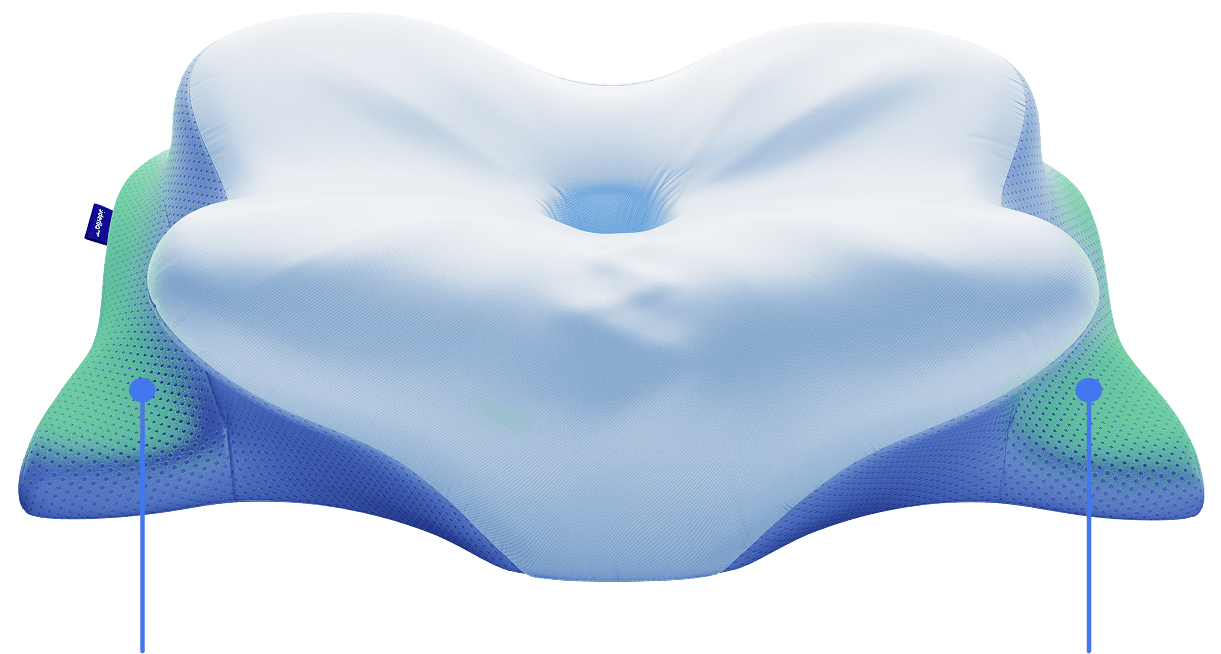
The butterfly contour design: three distinct support zones engineered for cervical alignment and pressure relief.
Together, these three zones create what sleep ergonomics researchers call a "passive corrective environment" — a sleeping surface that automatically guides the body into optimal alignment without requiring conscious effort from the sleeper. This is the fundamental insight behind the design: correction should happen while you sleep, not require a behavioral change.
Key Benefits: What the Science and User Reports Tell Us
1. Spinal Alignment — The Core Function
The primary claim of any neck alignment pillow is cervical spine support. For the Derila Ergo, this isn't a vague marketing promise — it's built into the physical geometry of the product. The cervical curve (lordosis) spans roughly 30–35 degrees in a healthy adult neck. When this curve is supported during sleep, the intervertebral discs decompress, the facet joints rest in their neutral position, and the surrounding musculature can fully relax. The result, reported by many users within the first 7–14 days, is a noticeable reduction in morning stiffness and the gradual easing of chronic neck tension that had previously been attributed to stress or aging.
2. High-Density Memory Foam — Adaptive Pressure Relief
Pressure points are the enemy of restorative sleep. When concentrated pressure is applied to a small area — like the side of the skull against a firm surface — it triggers micro-arousals: brief, subconscious awakenings that prevent you from reaching the deeper, restorative stages of sleep (slow-wave and REM). High-density memory foam distributes load across the largest possible surface area, reducing peak pressure to below the threshold that triggers these arousals. This is why people often report sleeping more deeply on a well-designed memory foam pillow, even if the total hours slept remain the same.
3. Snoring Reduction — The Airway Connection
Snoring is, at its physiological core, a vibration problem caused by partial airway obstruction. When the head is positioned too far forward (chin toward chest) or tilted laterally, the soft tissues of the throat — the soft palate, uvula, and tongue base — relax into a position that narrows the airway. The resulting turbulent airflow generates the characteristic snoring sound. By keeping the head in a neutral, slightly extended position, the Derila Ergo's central channel helps maintain a more open airway geometry. This won't address snoring caused by structural issues like deviated septum or significant sleep apnea, but for positional snorers — estimated to represent 56% of snoring cases — improved head positioning can make a meaningful difference.
4. Memory Foam Pillow for Side Sleepers — Purpose-Built Wing Design
Side sleeping is the most biomechanically demanding position for a pillow because the required loft height varies significantly from person to person based on shoulder width and mattress firmness. Generic pillows force side sleepers into a one-size-fits-all compromise. The Derila Ergo's raised lateral wings address this by providing a higher support zone at the position most needed by side sleepers — the area beneath the ear and along the cervical spine. Users consistently report that the wing support eliminates the compensatory muscle tension they had previously experienced trying to keep their neck level during sleep.
The Unfiltered Review: Pros, Cons & Our Honest Assessment
✅ What We Liked
- ✓ Excellent neck support — the cervical contour design maintains alignment without feeling rigid or clinical.
- ✓ Breathable foam construction — resists the heat retention commonly associated with memory foam products.
- ✓ Works for side and back sleepers — the multi-zone design addresses both positions in a single product.
- ✓ Adaptive pressure relief — memory foam responds to individual head shape and weight, personalizing support over time.
- ✓ 30-Day Money-Back Guarantee — allows risk-free trial to assess personal compatibility.
- ✓ Durable high-density foam — maintains structural properties significantly longer than budget alternatives.
⚠️ Limitations to Consider
- ✗ High demand / stock variability — the product periodically goes out of stock due to popularity; purchasing during availability windows is advisable.
- ✗ Online-only availability — currently not available in major brick-and-mortar retail stores, which prevents in-store testing.
- ✗ Adjustment period — some users report a 3–5 night acclimatization period as the body adjusts from their previous pillow geometry.
- ✗ Not ideal for strict stomach sleepers — the contoured design is not optimized for prone sleeping position.
Our Rating Breakdown
Who Should Consider the Derila Ergo?
Not every product is right for every person. Based on the design characteristics and the sleep science behind the butterfly contour, here is an honest assessment of who is most likely to benefit:
Side Sleepers
The lateral wing design was built for you. If you sleep on your side and frequently wake with neck pain, this is your most direct solution.
Back Sleepers
The central channel provides ideal support for preserving the natural cervical curve in the supine position.
Chronic Neck Pain Sufferers
If your GP or physiotherapist has identified poor sleep posture as a contributing factor, an ergonomic contour pillow is often the first recommended intervention.
People Who Snore
Positional snorers who snore primarily on their back or when the chin drops may see noticeable improvement from improved head-airway alignment.
People Who Wake Up Stiff
Morning stiffness that resolves within 30–60 minutes is a classic sign of positional muscle tension that quality cervical support can address.
Sleep Posture Optimizers
Those actively seeking ergonomic pillow upgrades as part of a broader sleep quality improvement protocol — pairing a new pillow with mattress, light exposure, and sleep hygiene improvements.
The Verdict: Is It Worth It?
Let's address the elephant in the room: the Derila Ergo costs more than the average pillow you'll find on the shelf of a discount retailer. And for some people, that initial price point triggers hesitation.
But consider the alternative cost structure. A single massage session targeting neck and shoulder tension typically costs between $70 and $130. Most people experiencing chronic sleep-related neck pain seek massage therapy once or twice a month — not as a solution, but as ongoing symptom management. Over the course of a single year, that's $840 to $3,120 spent addressing a problem whose root cause — your pillow — hasn't been fixed.
The Derila Ergo, by contrast, represents a one-time investment in addressing the source of the problem, rather than the downstream symptoms. A high-density memory foam pillow designed for cervical support, used nightly, can deliver consistent passive corrective support for 3–5 years.
The 30-day money-back guarantee also fundamentally changes the risk calculus. You are not being asked to commit to a product sight unseen. You are being offered a 30-night clinical trial in the most relevant environment possible: your own bed, with your own body, in your usual sleeping position. If it doesn't work for you, you have a clear exit.
Our Bottom Line
The Derila Ergo Memory Foam Pillow occupies a well-defined niche: it is an ergonomically engineered cervical support pillow backed by sound biomechanical principles and high-density material science. For side sleepers, back sleepers, and anyone experiencing sleep-related neck pain or morning stiffness, it represents a meaningful upgrade over conventional flat pillows. The butterfly contour design isn't a marketing gimmick — it's an anatomically rational solution to a very common mechanical problem. The 30-day guarantee makes trying it a low-risk decision.
Ready to Wake Up Without Neck Pain?
The Derila Ergo Butterfly Memory Foam Pillow is currently available with a limited-time discount. Stock levels fluctuate — check availability now.
✅ 30-Day Money-Back Guarantee | ✅ Free Shipping Available | ✅ Risk-Free Trial
Check Availability & Current Discount →Frequently Asked Questions
Answers to the most common questions about ergonomic pillows and the Derila Ergo.
30-Day Money-Back Guarantee • Risk-Free Trial
💤 Check Availability & Current Discount →